

Unlocking the Neurological Dance Behind Perfect Free Throws
The Fusion of Psychology, Physics, and Physiology That Shapes the Game’s Most Deceptively Simple Shot
The Paradox of Simplicity in Basketball’s Most Isolated Moment
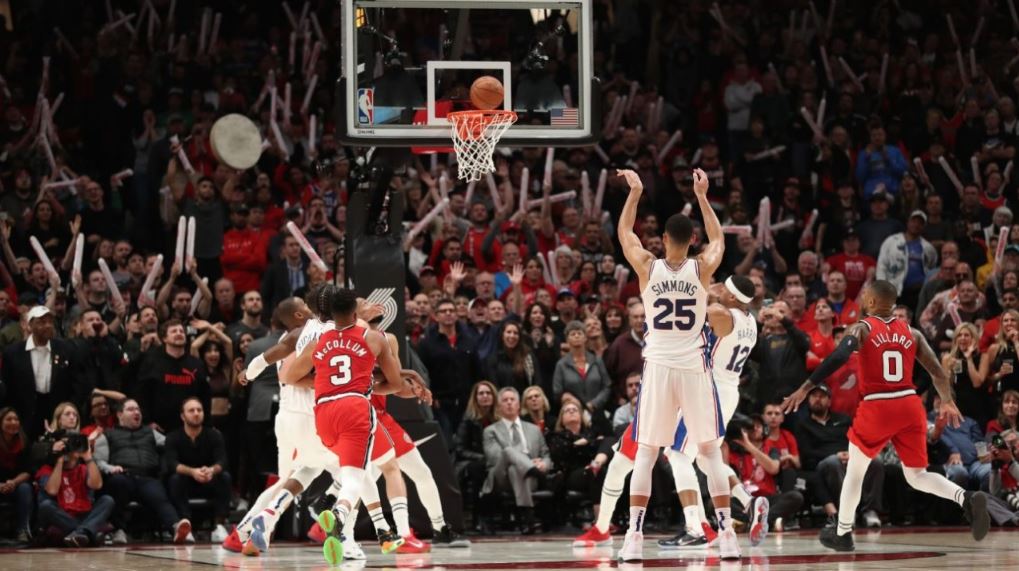
Among all the dramatic plays in basketball, none seem as still or silent as the free throw. It lacks the spectacle of a fast break, the chaos of a rebound, or the excitement of a buzzer-beater. Yet within that pause lies one of the most intricate acts of coordination in all of sports. The free throw is a controlled experiment in consistency. It removes the variables of defense, time, and movement, leaving only the player, the ball, and the rim. What appears to be routine is actually a moment of immense psychological and biomechanical precision.
Every free throw attempt is a test of the brain’s ability to synchronize countless micro-movements through muscle memory. Success depends not on raw athleticism but on neural programming, rhythm, and emotional regulation. The body becomes a living equation, balancing force, angle, and arc through subconscious repetition. For players, mastery of the free throw is not simply about form. It is about translating practice into instinct, turning deliberate motion into effortless repetition. It is the closest thing basketball has to meditation in motion.
The Neuroscience of Repetition and Automaticity
Muscle memory is not a muscle-driven process but a neurological phenomenon. When a player practices free throws repeatedly, neural pathways strengthen through a process known as myelination. Each successful repetition reinforces the connection between the motor cortex, cerebellum, and spinal cord. Over time, movements that once required conscious effort become automatic. This transformation allows elite shooters to perform with remarkable precision even under intense pressure.
In scientific terms, this shift from conscious control to automatic execution is known as procedural memory formation. The brain creates a mental map that associates sensory input with motor output. Every detail, from the way the fingers release the ball to the rhythm of breathing before the shot, is encoded through repetition. When muscle memory takes over, the player’s conscious mind becomes quiet. Too much thinking disrupts the flow. The key is to trust the programming that practice has built. This is why great shooters often describe a perfect free throw as effortless. Their bodies already know what to do. Their minds simply step aside.
The Physics Behind the Perfect Arc
While the neurological side governs control, the physical world dictates success. The ideal free throw exists within a narrow band of scientific precision. Studies in sports physics have shown that the optimal release angle for a free throw is roughly forty-five to fifty degrees, depending on a player’s height and release point. The ball must travel with just enough backspin to stabilize its flight and soften its contact with the rim. Too much force flattens the trajectory. Too little force allows gravity to take over before the shot reaches the hoop.
What makes the free throw fascinating is how the body instinctively learns these calculations through repetition. A player may never consciously think about velocity or trajectory, yet through thousands of attempts, their brain internalizes the perfect balance between force and finesse. The mechanics become musical. The elbow rises, the wrist flicks, and the ball follows an invisible pattern that has been refined by years of sensory feedback. Physics and physiology merge seamlessly into performance. Every successful free throw is a quiet collaboration between the laws of motion and the biology of memory.
The Role of Focus, Breathing, and Emotional Control
At its core, the free throw is as much psychological as it is mechanical. Standing alone at the line, a player faces an arena of noise and expectation. The ability to shut out distraction is what separates average shooters from great ones. Breathing plays a crucial role in this process. Controlled breathing lowers heart rate and stabilizes the nervous system, creating a physiological foundation for focus. When the breath becomes rhythmic, the mind follows, and the body regains its balance between tension and relaxation.
Visualization techniques often accompany this focus. Many players mentally rehearse the shot before taking it, imagining the sound of the net and the rotation of the ball. This mental preparation activates the same neural circuits used during the actual motion, further strengthening muscle memory. Emotional control becomes the final ingredient. Anxiety triggers excess adrenaline, which tightens muscles and disrupts timing. Calmness allows the natural rhythm of the body to take over. The free throw becomes not a reaction to pressure but an expression of confidence. It is the art of stillness in motion.
The Evolution of Free Throw Routines
Every great shooter has a ritual, a sequence of movements that centers the mind and resets the body. Whether it is a deep breath, a dribble pattern, or a simple pause, these routines serve a neurological purpose. They activate familiar neural pathways, signaling the brain to enter its practiced state. The repetition of ritual mirrors the repetition of motion. Both contribute to consistency. When a player performs the same pre-shot routine, they effectively tell their brain, “We have been here before.” This cue reduces cognitive noise and aligns focus on execution.
Some routines are as iconic as the players themselves. Steve Nash’s deliberate rhythm, Stephen Curry’s compact fluidity, and Ray Allen’s mechanical precision each reflect personal adaptation of the same principle. These sequences are not superstitions. They are anchors of attention, bridging the gap between chaos and control. The more a routine becomes ingrained, the less external pressure matters. The mind locks into familiarity, and muscle memory does the rest. The best free throw shooters are not just accurate. They are masters of routine synchronization, turning repetition into artistry.
Fatigue, Form, and the Role of the Core
Fatigue is an invisible opponent that alters everything from mechanics to decision-making. In the context of free throws, fatigue affects both the mind and the body. As energy levels drop, muscle coordination begins to waver. The arms may tire, but the true culprit is often the core. The free throw’s stability begins in the lower body, traveling upward through the hips, spine, and shoulders. When the core weakens, balance suffers, and the shot becomes inconsistent. Players compensate with extra arm effort, which disrupts timing and trajectory.
This is why elite players train far beyond shooting form. They strengthen their lower bodies and cores to preserve form under pressure and exhaustion. A tired player who can maintain balance and posture retains a higher shooting percentage late in games. The connection between biomechanics and endurance underscores how free throw success is built on holistic conditioning. It is not only about the wrist or elbow but about the entire kinetic chain that transfers energy through the body with efficiency and precision.
The Data Revolution and Modern Training Methods
Modern basketball has embraced technology to refine every aspect of free throw shooting. Motion capture systems, slow-motion analysis, and biomechanical sensors allow coaches to dissect the mechanics of each attempt. Advanced analytics can now measure arc height, spin rate, and release consistency. These metrics help players identify subtle flaws invisible to the naked eye. For example, a variation of only two degrees in release angle can mean the difference between a swish and a rimmed-out shot. Data transforms intuition into measurable feedback, accelerating the learning process.
Virtual reality and neuromuscular training have also entered the mix. Players can now simulate high-pressure environments without leaving the practice facility, retraining their brains to remain calm under stress. Some teams use stroboscopic glasses that intermittently block vision during drills, forcing the brain to process movement more efficiently. These innovations represent the next stage in the evolution of muscle memory, where science and simulation merge to perfect human rhythm. The free throw is no longer just a shot. It has become a field of experimentation where technology meets biology to create precision beyond instinct.
The Psychology of Failure and Recovery
No player, regardless of skill, is immune to misses. What separates the greats is how they respond to them. Failure in free throw shooting can create mental friction, breaking the subconscious flow that muscle memory relies upon. Overthinking leads to mechanical hesitation, and hesitation breeds inconsistency. The key to recovery lies in emotional resilience. Players who can reframe misses as feedback rather than failure are better equipped to reset their focus for the next attempt.
This mental discipline is cultivated through mindfulness and repetition. Consistent practice teaches the brain to treat every shot as an isolated event. By focusing on process instead of outcome, players detach emotionally from the result, allowing confidence to remain stable even during slumps. In this way, the art of free throw shooting mirrors life itself. Success depends not only on skill but on the ability to remain centered when things go wrong. The body remembers what the mind believes. When belief remains steady, performance follows.
The Harmony of Mind, Motion, and Memory
The free throw stands as a symbol of harmony between science and soul. It embodies the unity of mental clarity, physical rhythm, and neurological precision. Beneath its quiet simplicity lies a complex choreography of muscle memory, physics, and psychology. Each element must function in concert for success to occur. The shot begins with thought, transforms into motion, and ends in memory. It is the essence of repetition turned into mastery.
In the broader narrative of basketball, the free throw reminds us that greatness is not always loud or spectacular. Sometimes it is found in stillness, in the quiet repetition of a single movement perfected through discipline. Behind every swish is a symphony of neurons firing, muscles aligning, and confidence reaffirmed. The hidden science of the free throw is not just about accuracy. It is about the human capacity for precision, balance, and self-trust. In that brief pause between dribble and release, the game slows, the mind steadies, and the body speaks a language it has spent a lifetime learning.